All Categories
Featured
Table of Contents
To reverse a years of deteriorating overall aspect efficiency, local labour market policy is shifting from easy job production to managing active labor force shifts. Federal governments and employers are scaling short, modular training programs and micro-credentials in data analytics and digital operations to gear up workers for emerging roles. Workplace-based knowing and apprenticeship-style paths are ending up being more typical as companies incorporate AI tools into everyday workflows.
With oil costs anticipated to typical $55-60 per barrel in 2026, regional federal governments are intensifying their focus on expenditure discipline and private capital mobilisation. Financial policy is pivoting toward the monetisation of state-owned properties in logistics, energies, and desalination to reroute funds towards higher-impact financial investments. While borrowing through sukuk and sustainability-linked bonds is anticipated to increase to money tactical deficits, the focus remains on strengthening non-oil revenue frameworks.
PwC Middle East financial policy and strategy partner Jing Teow said: "Having already mobilised capital and policy at scale, GCC federal governments are now concentrated on shipment. In 2026, the priority is strengthening financial strength through more safe trade and financial investment relationships, efficient AI deployment, handled labor force shifts and disciplined financial policy in a more difficult and fragmented international environment.".
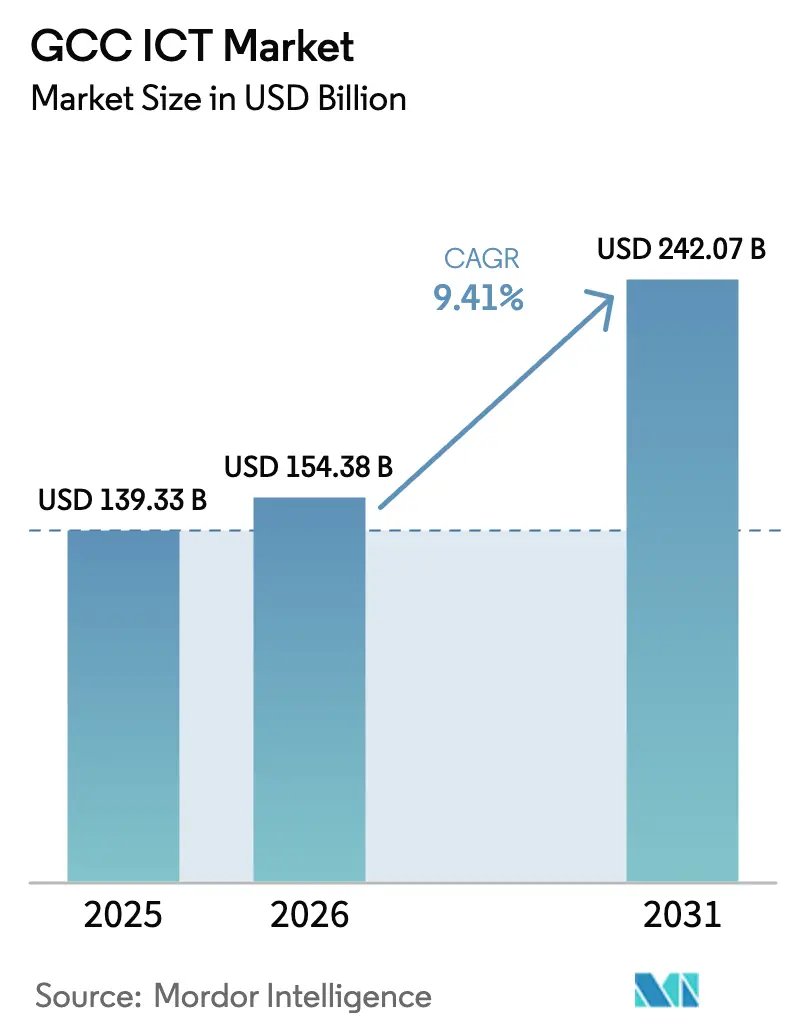
Saudi Arabia and UAE are poised to lead the Gulf region's economic growth in 2026, supported by strong private-sector efficiency, durable domestic need and restored investment momentum, according to the current ICAEW Economic Insight Q4 2025 report, produced by Oxford Economics. The GCC is expected to outshine most worldwide regions peers next year, with regional GDP projection to grow by 4.4%. Throughout the GCC, non-energy activity is predicted to broaden by 4.1% in 2026, driven by strong labour markets, improving credit conditions and increasing investment in innovation and AI-related facilities.
Oil incomes will be under pressure in the very first half of 2026, production is expected to rise again in the 2nd half of 2026, supporting the area's medium-term outlook, it specified. Saudi Arabia will stay a significant contributor to GCC momentum, with GDP forecast to grow 4.3% in 2026.
How to Maintain a Competitive Advantage in Dubai
Development will be supported by industrial expansion and policy reforms, including alleviated foreign ownership rules that aim to promote more financial investment. The fiscal deficit is predicted to widen to 5.6% of GDP next year amid softer oil prices, while the recent five-year rent freeze in Riyadh intends to relieve inflationary pressures, though it may constrain future housing supply.
Strong domestic fundamentalsThe UAE is also placed for another strong year of performance, with GDP projection to rise 5.6% in 2026 as non-oil sectors continue to expand. Tourism, trade and monetary services stay essential growth motorists, supported by population development and sustained domestic need. Dubai's economy grew 4.4% in the first half of 2025, reflecting broad-based non-oil strength.
Oil production is anticipated to choose up once again in the 2nd half of 2026, complementing continuous financial investment in infrastructure, technology and worldwide trade collaborations. Hanadi Khalife, the Head of Middle East, ICAEW, stated: "This quarter's outlook strengthens how far the GCC has actually been available in structure diverse, durable and globally competitive economies.
Evaluating Industrial Strategy Models across the GCCScott Livermore, ICAEW Economic Consultant, and Chief Economic Expert and Handling Director, Oxford Economics Middle East, stated: "Saudi Arabia and the UAE are going into 2026 with strong structures. Saudi non-oil activity is acquiring pace, supported by robust demand and rising financial investment, even as financial pressures increase.""The UAE continues to gain from strong domestic fundamentals, a sharp uplift in federal government spending and sustained diversity efforts.
Predicting the Next GCC Business Environment
What differentiates 2026 from preceding years is not simply the velocity of technological change, though that velocity is genuine, however rather an essential shift in how business develop of their GCCs' function. The is anticipated to grow to 4 hundred thirteen billion dollars by 2040, but this growth masks a more profound transformation.
Rather, they ask whether these centers drive development, own profit-and-loss duty, and contribute to competitive differentiation. In 2026, the most effective GCCs will behave like internal startups, agile, cross-functional, insight-driven, and deeply aligned with international company results. This shift from execution to ownership represents maybe the single most significant tactical recalibration in the GCC design's advancement.
Today, we're convening more than 3000 meetings in between investors and 119 Gulf-listed business with a combined worth of $2.4 trillion at the HSBC GCC Exchanges Conference 2026, in London. We're bringing together investors, companies, exchanges, and policymakers to discuss what is changing in the region, and what comes next, consisting of the growth and ongoing development of the Gulf's capital markets, and the region's growing role in international networks of capital and trade.

Latest Posts
Achieving Strategic Excellence in the Middle East
Navigating Regional Market Strategy in 2026
Key Benefits of Strategic Excellence in the GCC